Dedication

Dedicated to Intensive Care nurses everywhere

Monday, October 19, 2015

A Day in the LIfe - Rehab by the Numbers - Part six

Continues...


Carolie could not stand by herself.  Her muscle wasting was such that she required an overhead support harness to walk on a treadmill.  With support she could stand for a moment to transfer to a wheelchair or to a toilet. Her immobility left her vulnerable to falls.  She had gone from an active professional woman to a mostly helpless chair bound invalid in the space of two months.   

Toileting remained a dangerous activity.  She fell off the toilet a couple more times while nurses left her unsupervised.  When someone with brain trauma falls it can be life threatening. There were many junior nurses on the ward who meant well, but who lacked the experience necessary to manage brain trauma patients without close supervision.  I had to complain to senior nurses to ensure supervision protocols were strictly observed during trips to the bathroom. 

The wonderful School of Music friends followed us to the ward.  Their singing efforts went unremarked initially by management but soon attracted the attention of one of the senior nurses, who complained they were too loud.  She had a patient who suffered from severe headache, but I question whether the complaint came from her.  I doubt her extremely debilitating condition would have been affected by beautiful singing.  I suspect it was another iteration of the ‘command and control’ approach that pervaded management of the ward.   

After a minor run in between our friends and this nurse we decided to limit the singing to the gym.  The senior physiotherapist was welcoming as music was played during gym sessions.  The extra stimulus of high quality live singing was a bonus.  The majority of patients responded positively to the singing, such that it became a regular fixture in late afternoon sessions in the gym.   

After one such singing session on a Sunday afternoon in the ward room - prior to the singers limiting their sessions to the gym (and outside on weekends) - our friends left Carolie sitting up in her wheelchair.  She would be uplifted by joining the singing and occasionally forget her physical limitations.  Just as some visiting children from her school and their parents were taking their leave she suddenly stood up in a farewell reflex.  She fell heavily to one side, bruising herself badly.   

On receiving a call from the ward I immediately drove anxiously to the hospital. On arrival a senior nurse proceeded to berate me about the singers leaving her unattended, despite this not being their concern as the visiting family had arrived.  I defended our friends stoutly and subsequently discovered it was the visiting family that triggered the accident.  Again, they would have no reason to assume any risk.  The nurse made it clear ‘the situation’ could not continue and that change would be made.  It was unclear what this meant but did not bode well to my ears – it was a portent of more ‘command and control’.  We did not have to wait long.


During a luncheon period I went to fetch something from Carolie’s room.  She remained in the dining room.  I was surprised to find unknown persons standing by the bed and her personal effects removed.  It quickly became apparent that Carolie had been moved without notice.  She was now accommodated in a room adjacent to the nurses’ station.  Her beautiful view on to flowers was gone; the room had damaged blinds so sunlight heat could not be managed as easily; it was noisier as immediately outside the room was an administrative area; and worst of all, Carolie had not been informed of the change.  

Nurse management had decided that Carolie needed to be closer to the station in case of further falls.  It was instructive that nurses continued to leave her unsupervised on the toilet.  For the second time on our labyrinthine journey I lost my temper.
 

Arcing with anger I returned to the dining room and made it very clear that I wanted to transfer Carolie to another facility.  After our treatment to this juncture by ward management I saw this as a bridge too far.  The place seemed mired in a time when patients were totally disempowered and subject to the whim of fierce nursing sisters.  Many a motion picture has focussed on the theme.  Flashes of One Flew Over the Cuckoo’s Nest kept 'gingering' my sense of this ward culture.  I refused to be bound by the ‘givens’ in this particular time warp.  This time I did the berating, reducing the same senior nurse to tears in the process. 

The nurse was fairly tough but maybe unused to having to deal with someone articulate and determined, who had dealt with much tougher souls, and who was as angry as I was.  On cue, after a little dust had settled, the ward boss reappeared to again put me in my place and upbraid me for ‘abusing’ her staff.  She agreed the shift manager had done the wrong thing by not consulting with us but that did not excuse my treatment of her staff member.  


I indicated to her that the conversation was pointless as she was about ‘command and control’ and nothing I could say would change that.  I defended the accusation of ‘abuse’, replying that although I was truly angry I had not used any terms of abuse, which was true.   She tried to twist my evident anger into a ‘personal problem’ - perhaps I needed counselling.  No, what we needed was to be treated with respect and not disempowered.  My ‘Red Queen’ alert was screeching:

          ‘Speak when you’re spoken to!’ the Red Queen sharply interrupted her.
            ‘But if everybody obeyed that rule’, said Alice, who was always ready for a little argument, ‘and if you only spoke when you were spoken to, and the other person always waited for you to begin, you see nobody would ever say anything, so that—‘
            ‘Ridiculous!’ cried the Queen.*
To be continued....

* Lewis Carroll, Through the Looking-Glass, The Folio Society, London, 1962, p. 109


Monday, October 5, 2015

A Day in the Life - Rehab by the Numbers - Part five

Continues....


After my second 'run in' with the ward manager I decided to bring my concerns to the ACT Health Minister.  I set the scene by outlining Carolie's situation up to this point, particularly the attitude of senior medical staff to alternative therapies.  Then I launched into a critique of our experience on this ward: 
       

            When we were informed Carolie would be transferred to Ward ..... for rehabilitation we were pleased at the prospect of intensive physiotherapy and a healing environment.  Whilst we have no complaint with the various therapists involved in Carolie's recovery, the overall tenor of management is controlling, regimented and counter-productive toward a healing approach.  

           We have not been allowed to put the beautiful posters that Ainslie school children have lovingly prepared on the walls of Carolie's room.  I have organized a very gentle form of chiropracture treatment for Carolie.  I have been advised this is not possible because of a policy concerning 'accredited clinicians'.  It seems the neurosurgeons of RPAH and TCH and the senior ICU consultants/registrars of RPAH have a different and more sophisticated approach.  When I advised the senior doctor who spoke to me today of these approaches she said they were all wrong.  

            When I had asked earlier in Ward ..... about public liability policies as they relate to external therapists I was advised such a policy did not exist.  I also expressed a willingness to indemnify ACT health against liability if necessary.  I repeated this offer in Ward .... but was told this was not possible.  This obstruction to Carolie's healing has been conveyed in an insensitive, authoritative way that beggars belief.  The lack of concern for the well-being of Carolie as an individual requiring a caring, healing environment is sorely lacking in the case of these people.  

            All of the specialists I have approached and most of the medical and/or nursing staff are supportive of my approach to holistic healing.  However, those in administrative authority appear less interested in healing and more concerned with a narrow interpretation of their management function.  In my view this type of inflexibility should be anathema to those interested in healing outcomes.*

My patience was running thin so I wrote what I meant.  The inevitable initial discussion with the medical hierarchy took place during 'rounds' in the ward gym.  The gym was the centre of daily activities – everything revolved around the physiotherapy regime.   

Anyone not engaging in the process was given a gentle talking to – one bloke recovering from a stroke was clearly in this category and would sit passively whilst an earnest physiotherapist explained the benefits of more effort and the obvious downside to not trying enough.  I am not sure whether he weighed the relative merits of the options but he seemed to give the exercises a bit of a go. He would sit and observe people and smirk to himself occasionally.  I believe he had a fairly jaundiced view of his fellow patients and the ward in general.  At the first opportunity he fled the joint and was found wandering along a busy road away from the hospital.  It turned out the exercises were working but clearly he had a third option in mind all along.  Security on the ward was tightened after this episode. 

I digress.   My meeting with the senior rehabilitation specialist went to script.  I made my usual impassioned pitch for an enlightened approach to patient recovery and the efficacy of complementary therapies, as evidenced by Carolie's experience to date. I was given the 'standard' line in medical obfuscation, which went something like this:  “We do not agree there is any clinical indication for the therapies you have requested.  Only evidence-based clinical treatments would be considered under hospital policy.”  My reaction was calmly stoic but underwhelmed.   Images of Escher stairs seeped into my consciousness.


I was weary.  My growing unease with the operational 'culture' of the ward was seeping into every pore.  I knew the hospital did not have a policy on third party therapists accessing patients.  I had offered to indemnify the hospital against liability, but was doubtful this would work.  Hospital patients and their family have to sign forms relentlessly, approving procedures, acknowledging risk and relieving staff and hospital of responsibility if things go awry in the normal course of events.  How could a third party with no contractual obligations to the hospital be indemnified?  However, I saw the need for a more enlightened approach.

Next we had a meeting with the Director of Rehabilitation and Director of Nursing.  When I discovered the lady-in-charge was also to attend I baulked and asked that she not be included as her attitude was unhelpful.  We had a cordial discussion with the Director, who reiterated the same line as the rehabilitation specialist.  I realized he was the actual font of the 'party line' and that the specialist was merely a spear thrower. 

It was a well-honed tune that he had mastered some time back;  subordinates clearly danced to a familiar beat.  I felt caught in a Kafkaesque construct, writ large on his assuredness as to the 'rightness' of everything he said.  He confirmed a scepticism concerning the therapies I was advocating, although threw us a ‘tid-bit’ that his wife was keen on various alternative therapies.  There is always a 'kicker' in a Kafkaesque space.  It was totally ‘civilized’ and totally non-productive from our point of view.   


We were advised the issues raised regarding external therapists would be referred to the Medical and Dental Appointments Advisory Committee for advice and recommendations.  He thanked us for bringing this area of confusion to light.  That might have been something if I thought there was a scintilla of a chance that the 'closed shop' (or, more accurately, 'closed mind') thinking on patient recovery would be challenged.  I got the impression that this area of medicine, which should be in the forefront of holistic approaches, would be one of the last bastions to change.  Certain medical strongholds are defended stoutly.

I wrote several times to the relevant government minister and the head of Canberra health.  I received a formal response outlining the ‘party line’ in clear 'bureaucratize'.  The fact that treating teams in both the ICU in Sydney and the high dependency wards in RPA and TCH had worked with us to allow complementary therapists access to Carolie did not register.


This was to be managed ‘by the book’ and they would brook no opposition.  I had to ‘like’ it as ‘lumping it’ was not an option.  I remain convinced that complementary therapies denied us at this time would have expedited Carolie’s recovery.  I finished my response to the Minister as follows:

             It is regrettable that my wife is not able to take advantage of a more progressive paradigm,   but hopefully the issues will be further reviewed and addressed over time so that patients in future will have access to the broadest range of healing care in the area of acute rehabilitation.+

In reality my persistence was somewhat futile but at least I had tried to breach the strongholdThere were indications in several areas of the labyrinth that in the future a brave soul with exceptional grappling irons might just succeed.

To be continued....

* Email from Mark Thomson to Minister for Health, 30 April 2012


+Email from Mark Thomson to ACT Minister for Health, 16 May 2012

Monday, September 21, 2015

A Day in the Life - Rehab by the Numbers - Part four

Continues....


I was conscious of the need to ‘balance’ Carolie’s metabolism.  In yoga and other ancient therapeutic practices, the idea of balancing bodily energies is central to healing.  I was aware of various therapists working in Canberra with a reputation as healers.   

Just as I had organized acupuncturists and a samvahan practitioner to assist balance the natural healing rhythms, I was keen to explore various by-ways of chiropractic techniques, with its focus on nerve function and restoration through adjustments to the spinal column.  I knew that variants of this approach used extremely gentle manipulations of the spine.   

With help from a fellow yoga instructor I arranged for a highly recommended therapist to treat Carolie in the ward room.  I cleared this with the physiotherapist manager, and other therapists.  I checked with nursing managers and the ward social worker.  The neurosurgeons had cleared the way for an acupuncturist to treat Carolie on the high dependency ward.  We assumed this less intrusive technique would present no difficulties for medical staff.  Wrong!

The day of the first treatment was the last.  The therapist moved Carolie to her custom designed table, which was better suited to treating the patient on their stomach.  The technique involved very gentle pressure to the spinal area for fifteen minutes.  Immediately Carolie responded favourably – her breathing was easier and she felt better.   

A senior nurse not in the ‘loop’ decided the therapy was outside the ward regime and rushed off to report to the ward manager, the formidable 'lady-in-charge'.  She descended with great gusto to find the therapy session complete.  She 'ordered' me to meet with her and other colleagues immediately.  “The Queen's croquet ground” with associated threatened ‘head lopping’ loomed large as I prepared for yet another dangerous bend in the labyrinth.*


A rapidly convened meeting confronted me, including the aforementioned senior nurse, one of the physiotherapists (not the manager I had spoken to earlier), a social worker and the 'lady-in-charge'.  It felt like an extraordinary Star Chamber process with me at its centre.  I was asked to explain who the therapist was and the basis for her treatment of Carolie.  I was called to justify myself in a way I found demeaning and disempowering.  

 I knew Carolie would benefit from the treatment course – I had seen her response to the earlier therapies.  After one samvahan treatment her response was overwhelmingly positive.  During the initial treatment of about twenty minutes’ duration Carolie indicated her breathing felt easier and she responded well to the gentle manipulations of her lower spine.   


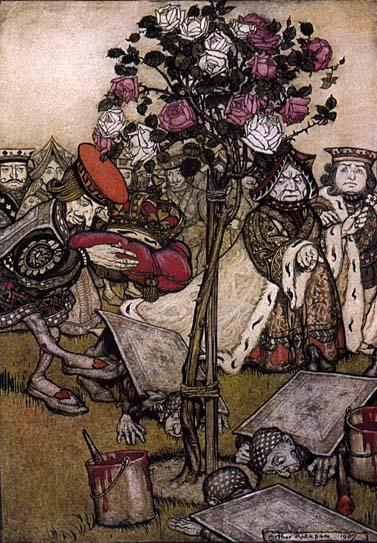
Despite my reasoned arguments on the obvious benefits the clear message from the  'meeting' was that engagement of outside therapists was against hospital 'policy' and that I would have to seek approval from a rehabilitation specialist to continue. It was also clear the lady-in-charge would brook no opposition to her authority.  I thought of displaced posters and Alice's dismay at white roses that had to be painted red to appease the Queen.  
To be continued....

*              See Carroll, op cit, Ch 8

Thursday, September 17, 2015

A Day in the Life - Rehab by the Numbers - Part three

Continues...


The meal regime confirmed my worst fears.  It was the mad hatter’s tea party without riddles to leaven the mood - where any great interest in “questions of eating and drinking” were futile.  Meal sheets would appear relentlessly every day, with the vague expectation that boxes ticked would deliver nutritious fare – wrong!  

It was made very clear that mealtimes would be observed strictly.  All the inmates would be ‘wheeled’ or walked in to contemplate meals that were mostly doomed.  It took me back to gastronomic dog days at boarding school - the smells of a forthcoming meal would creep into one's consciousness hours before the reckoning like loathsome golems. 


Carolie would sit aimlessly in front of torpid meals full of sugary or salty carbohydrates, tired vegetables and tortured proteins. With her eating reflex impeded, she needed someone in attendance to prompt and assist.  I suspect the unappetizing fare played as much a part as her injury in her listlessness during meals.   She has always had a minor swallowing impediment, which had been further exacerbated by weeks of tracheotomy treatment.  The swallowing reflex is a complex mechanism that we take for granted until it is disrupted by trauma.

It was a worrying indicator of the overall tenor of ‘rehabilitation’ on offer, especially as good nutrition is a key component of recovery.  All of the literature I explored on the subject confirmed speedy and effective post-surgical recovery requires catering to specific nutritional needs while the body is in a relatively weakened state.   

No heed of this concept seeped into the operational modalities of the hospital, and I expect the same is true of most large hospitals.  It would require a patient-centred holistic response that is impossible under existing modalities and funding realities.  Nutritional strategies to enhance recovery were completely lacking; the poor quality and limited choices of food probably actively impeded the process.   


A capacity to choose healthy food suited to a patient’s specific needs would be an empowering element of a recovery journey.  Such a notion was completely missing.  One of the partners of another patient became so incensed by the poor meal regime, he wrote a letter of complaint to the relevant government minister. 

Mealtime was an opportunity to gauge the overall tenor of the place.  I never heard someone say they wanted to stay on the ward, which is not surprising really, as everyone wants ‘out’ after surviving various traumas.  The yearning for normality can become all-consuming in a setting that is quite disempowering.  However, the vehemence of some patients’ determination to leave surprised me.   

 An almost universal disgruntlement with meals was evident, apart from an occasional recovering stroke victim who gobbled everything as a reflex response and stared fixedly ahead. Cognitive impairment was apparent in many patients, some of whom had experienced multiple strokes. Their dignified stoicism was humbling, and occasionally unsettling.  I was often uncomfortable watching a patient grit their teeth while consuming a meal grudgingly, with a sentiment that seemed something akin to ‘survival is everything’! Alice again:

          The Hatter was the first to break the silence. ‘What day of the month is it?’ he said, turning to Alice:  he had taken his watch out of his pocket, and was looking at it uneasily, shaking it every now and then, and holding it to his ear.
            Alice considered a little, and then said ‘The fourth.’
            ‘Two days wrong!’ sighed the Hatter. ‘I told you butter wouldn’t suit the works’ he added, looking angrily at the March Hare.
            ‘It was the best butter,’ the March Hare meekly replied
            ‘Yes, but some crumbs must have got in as well,’ the Hatter grumbled: ‘you shouldn’t have put it in with the bread-knife.’
            The March Hare took the watch and looked at it gloomily: then he dipped it into his cup of tea, and looked at it again:  but he could think of nothing better to say than his first remark, ‘It was the best butter, you know.’*

Yes, exactly!  Except the best butter was not being used to make the clock tick and the crumbs were the least of our worries.  Occasional dark humour leavened the mood at these thrice-daily gatherings but I found mealtimes depressing.  


Concern over Carolie’s nutritional status grew.  Her reflux responses continued unabated and she appeared to be consuming less and less.  Sudden vomiting fits were alarming.  As ‘soft’ foods gave way to ‘normal’ on the dietician’s spectrum of definitions she lost weight and was largely disinterested in food.  The nursing staff weighed her regularly to monitor weight loss.  From her massively distorted figure as a result of post-operative oedema, she was now tipping the scales at just over 40kg and trending down.   

Friends left home-made meals occasionally, which I could heat for her in a microwave.  She would have a few mouthfuls but could not sustain interest for long. If she had more regular small meals tailored to her nutritional requirements, we would have had a better chance of mitigating the worst effects of post-surgery but the meal regime was set in stone and presented no opportunity for a managed nutrition program.  

It would require working closely with a nutritionist familiar with the specific needs of a patient and a food regime responsive to these needs.  Both were singularly lacking.  I am not sure what the occasional ‘nutritionist’ contact was meant to achieve, but from our perspective it was meaningless - another exercise in box ticking.

To be continued...


*              Caroll, op cit, p.60

Friday, September 11, 2015

A Day in the Life - Rehab by the Numbers - Part two

Continues...


We arrived during a working day and were shown to a two-bed room with a good view of an adjacent garden.  An elderly woman who had been in and out of the place a few times occupied the other bed.  She had been in the wars with cardio-vascular complications, but had her wits about her and an ‘organized’ presence.  She and Carolie became friends, and for a short time a mutual support team.  I was relieved as she had little engagement with the women in the high-dependency wardroom.  A friendly presence in the next bed helps satisfy one of the basic healing needs - sympathetic communication.  The woman is an artist and they quickly found areas of common interest. 

Gym work could not start immediately as various assessments were necessary to establish capacities and therapy plans.  One by one, various therapists appeared to complete their initial assessments.  We were looking forward to getting started with these, including physiotherapy, speech pathology and occupational therapy.  Carolie’s cranial infection required ongoing treatment, which ultimately led to interventions by infectious diseases physicians.*

The introduction to the rehabilitation environment was initially encouraging.  I want to stress at this point that my criticism of the overall approach adopted here does not reflect on the professionalism of the various therapists and specialists we encountered.  It reflects on the ‘one size fits all’ operational culture.  There was almost no opportunity to shape an individual response to services on offer.  It was all done by the numbers – regimented and inflexible.  It seemed as if decades of cultural change in the area of patient care had passed this unit by.

Sadly, the first discordant note sounded almost immediately.  We had used the beautiful posters from school classes to great effect as positive stimulation for Carolie.  The ward had lovely white walls as a backdrop for these.  Our first engagement with the senior nurse manager in charge of the ward dashed those plans.  She advised it was new hospital policy to disallow posters, paintings et al to be stuck on the walls.  


 Obviously, this edict had failed to reach the high dependency ward we had come from but strict adherence was the order of the day in this corner of the labyrinth.  I wondered at the bureaucratic mentality behind restricting an opportunity to create a stimulating space for people recovering from severe brain trauma.

Once again, the differing cultures at work in the labyrinth were on display.  I was frustrated to say the least and we found a staunch ally in the next bed.  She had a relative bring in one of her paintings to put on the wall.  The protest was short-lived and stymied by ‘she who must be obeyed’.   

The painting came down and I explored creative ways of propping up the posters without resort to wall sticking.  Most were viewable but their extraordinary effect diminished.  I imagined the ‘lady-in-charge’ as another relative of the red queen, whose edicts were not for flouting - we were smack in the middle of a croquet game whose rules were opaque, requiring careful footwork to avoid ‘head lopping’.*

To be continued... 


*               See Ch 8 of Lewis Carroll’s Alice’s Adventures in Wonderland

Monday, September 7, 2015

(VIII) A Day in the Life - Rehab by the Numbers - Part one


Do you recall the wonderful Beatle song, A Day in the Life?  It is a whimsical ode to the surrealistic nature of every day fare.  The things we do by rote - waking up, getting out of bed, readying for the day, catching the bus to work, having a smoke, reading a newspaper – are humdrum in the daily round - that is, until subsumed in mental flights of fancy and imagination, drug fueled or otherwise, or until we can no longer do them easily.  Then, the humdrum becomes a desperate focus – a way back from the precipice, the scary unknown. 

Our conscious mind appears to have limits, subject to genetic, cultural and environmental determinants.  We connect our mental constructs with others of like backgrounds – a cognitive ‘language’ or code that enables us to share emotions, perceptions and experiences with people on a sliding scale of familiarity – family, friends, local community, and so on down the scale until we get to people from completely different milieu, who have very little in common with us and whose cognitive code differs markedly. 

We are all on our own inside our personal construct and when the familiar code is corrupted, those once easily shared ‘understandings’ become difficult to achieve - this can be terrifying.

Knowledge and understanding of the plasticity of mind boundaries is growing; manifest in programs to expand capacities through cognitive training and exercise. However, the workings of our unconscious mind remain largely unplumbed.  The disciplines of psychology and psychiatry have doubtless evolved in modern times, but to my mind they have barely skimmed the surface of understanding the brain’s profound and subtle workings.   


The intuitive or ‘higher’ mind remains a largely unmapped mystery; our grasp of the workings of the unconscious appears rudimentary, which explains the ongoing role of religion in the lives of so many.  How do we explain all the unfathomable elements of our interior existence, our fears about life and death, without reference to higher orders of being?  It is difficult. 

In the event of needing to heal and mend, what role can the mind have in re-enlivening the humdrum of the daily round so that mind and body are back in healthy synchronicity?  Ideally, a healing place would bring various stimuli – physiological, psychological, emotional, and yes, spiritual – to bear on a trauma victim in the form of integrated therapies.   

Just as we are complex beings, made up of intersecting physical, psychological and emotional intelligences, so you would expect an effective treatment regime to be predicated on the right mix of non-compartmentalized resources to meet these intersecting needs.  Right, now that I have that off my chest, I can tell you about our rehabilitation experience at Canberra hospital. 

To be continued....


Sunday, September 6, 2015

Looking Glass Wards - Part twelve

Continues...


The news of imminent transfer to the Rehab ward finally came.  A rehabilitation specialist had assessed Carolie’s readiness for transfer.  A coordinator came by and indicated she would oversee her period in rehabilitation from an administrative perspective.   

We were excited at the prospect of graduation to the final bridging stage to home.  I made a reconnaissance trip to the ward and introduced myself to one of the nurse managers.  I got the general ‘lowdown’ on what to expect from the daily ‘regime’.  The rooms generally contained two patients, although there were sole occupant situations.  Meals were at fixed times and must be attended by patients – no meals in bed!   


The rehabilitation gym was the focal point of morning and afternoon activity, with one afternoon off a week allocated to case management meetings between therapists and nursing staff.  There would be no dilly-dallying.  I was getting the picture – we were on our way to a form of rehabilitation ‘boot camp’.  It should have come as no surprise that the labyrinth was going to reveal another ‘interesting’ byway - always be careful what you wish for!