Dedication

Dedicated to Intensive Care nurses everywhere

Monday, September 21, 2015

A Day in the Life - Rehab by the Numbers - Part four

Continues....


I was conscious of the need to ‘balance’ Carolie’s metabolism.  In yoga and other ancient therapeutic practices, the idea of balancing bodily energies is central to healing.  I was aware of various therapists working in Canberra with a reputation as healers.   

Just as I had organized acupuncturists and a samvahan practitioner to assist balance the natural healing rhythms, I was keen to explore various by-ways of chiropractic techniques, with its focus on nerve function and restoration through adjustments to the spinal column.  I knew that variants of this approach used extremely gentle manipulations of the spine.   

With help from a fellow yoga instructor I arranged for a highly recommended therapist to treat Carolie in the ward room.  I cleared this with the physiotherapist manager, and other therapists.  I checked with nursing managers and the ward social worker.  The neurosurgeons had cleared the way for an acupuncturist to treat Carolie on the high dependency ward.  We assumed this less intrusive technique would present no difficulties for medical staff.  Wrong!

The day of the first treatment was the last.  The therapist moved Carolie to her custom designed table, which was better suited to treating the patient on their stomach.  The technique involved very gentle pressure to the spinal area for fifteen minutes.  Immediately Carolie responded favourably – her breathing was easier and she felt better.   

A senior nurse not in the ‘loop’ decided the therapy was outside the ward regime and rushed off to report to the ward manager, the formidable 'lady-in-charge'.  She descended with great gusto to find the therapy session complete.  She 'ordered' me to meet with her and other colleagues immediately.  “The Queen's croquet ground” with associated threatened ‘head lopping’ loomed large as I prepared for yet another dangerous bend in the labyrinth.*


A rapidly convened meeting confronted me, including the aforementioned senior nurse, one of the physiotherapists (not the manager I had spoken to earlier), a social worker and the 'lady-in-charge'.  It felt like an extraordinary Star Chamber process with me at its centre.  I was asked to explain who the therapist was and the basis for her treatment of Carolie.  I was called to justify myself in a way I found demeaning and disempowering.  

 I knew Carolie would benefit from the treatment course – I had seen her response to the earlier therapies.  After one samvahan treatment her response was overwhelmingly positive.  During the initial treatment of about twenty minutes’ duration Carolie indicated her breathing felt easier and she responded well to the gentle manipulations of her lower spine.   
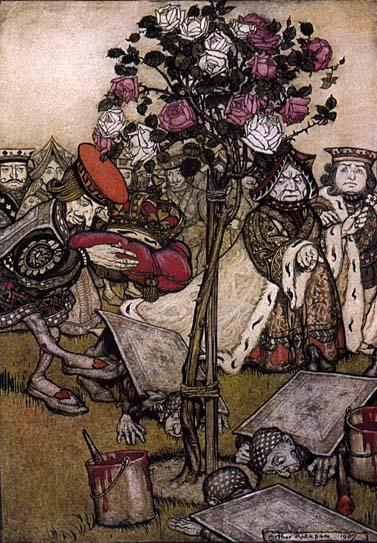


Despite my reasoned arguments on the obvious benefits the clear message from the  'meeting' was that engagement of outside therapists was against hospital 'policy' and that I would have to seek approval from a rehabilitation specialist to continue. It was also clear the lady-in-charge would brook no opposition to her authority.  I thought of displaced posters and Alice's dismay at white roses that had to be painted red to appease the Queen.  
To be continued....

*              See Carroll, op cit, Ch 8

Thursday, September 17, 2015

A Day in the Life - Rehab by the Numbers - Part three

Continues...


The meal regime confirmed my worst fears.  It was the mad hatter’s tea party without riddles to leaven the mood - where any great interest in “questions of eating and drinking” were futile.  Meal sheets would appear relentlessly every day, with the vague expectation that boxes ticked would deliver nutritious fare – wrong!  

It was made very clear that mealtimes would be observed strictly.  All the inmates would be ‘wheeled’ or walked in to contemplate meals that were mostly doomed.  It took me back to gastronomic dog days at boarding school - the smells of a forthcoming meal would creep into one's consciousness hours before the reckoning like loathsome golems. 


Carolie would sit aimlessly in front of torpid meals full of sugary or salty carbohydrates, tired vegetables and tortured proteins. With her eating reflex impeded, she needed someone in attendance to prompt and assist.  I suspect the unappetizing fare played as much a part as her injury in her listlessness during meals.   She has always had a minor swallowing impediment, which had been further exacerbated by weeks of tracheotomy treatment.  The swallowing reflex is a complex mechanism that we take for granted until it is disrupted by trauma.

It was a worrying indicator of the overall tenor of ‘rehabilitation’ on offer, especially as good nutrition is a key component of recovery.  All of the literature I explored on the subject confirmed speedy and effective post-surgical recovery requires catering to specific nutritional needs while the body is in a relatively weakened state.   

No heed of this concept seeped into the operational modalities of the hospital, and I expect the same is true of most large hospitals.  It would require a patient-centred holistic response that is impossible under existing modalities and funding realities.  Nutritional strategies to enhance recovery were completely lacking; the poor quality and limited choices of food probably actively impeded the process.   


A capacity to choose healthy food suited to a patient’s specific needs would be an empowering element of a recovery journey.  Such a notion was completely missing.  One of the partners of another patient became so incensed by the poor meal regime, he wrote a letter of complaint to the relevant government minister. 

Mealtime was an opportunity to gauge the overall tenor of the place.  I never heard someone say they wanted to stay on the ward, which is not surprising really, as everyone wants ‘out’ after surviving various traumas.  The yearning for normality can become all-consuming in a setting that is quite disempowering.  However, the vehemence of some patients’ determination to leave surprised me.   

 An almost universal disgruntlement with meals was evident, apart from an occasional recovering stroke victim who gobbled everything as a reflex response and stared fixedly ahead. Cognitive impairment was apparent in many patients, some of whom had experienced multiple strokes. Their dignified stoicism was humbling, and occasionally unsettling.  I was often uncomfortable watching a patient grit their teeth while consuming a meal grudgingly, with a sentiment that seemed something akin to ‘survival is everything’! Alice again:

          The Hatter was the first to break the silence. ‘What day of the month is it?’ he said, turning to Alice:  he had taken his watch out of his pocket, and was looking at it uneasily, shaking it every now and then, and holding it to his ear.
            Alice considered a little, and then said ‘The fourth.’
            ‘Two days wrong!’ sighed the Hatter. ‘I told you butter wouldn’t suit the works’ he added, looking angrily at the March Hare.
            ‘It was the best butter,’ the March Hare meekly replied
            ‘Yes, but some crumbs must have got in as well,’ the Hatter grumbled: ‘you shouldn’t have put it in with the bread-knife.’
            The March Hare took the watch and looked at it gloomily: then he dipped it into his cup of tea, and looked at it again:  but he could think of nothing better to say than his first remark, ‘It was the best butter, you know.’*

Yes, exactly!  Except the best butter was not being used to make the clock tick and the crumbs were the least of our worries.  Occasional dark humour leavened the mood at these thrice-daily gatherings but I found mealtimes depressing.  


Concern over Carolie’s nutritional status grew.  Her reflux responses continued unabated and she appeared to be consuming less and less.  Sudden vomiting fits were alarming.  As ‘soft’ foods gave way to ‘normal’ on the dietician’s spectrum of definitions she lost weight and was largely disinterested in food.  The nursing staff weighed her regularly to monitor weight loss.  From her massively distorted figure as a result of post-operative oedema, she was now tipping the scales at just over 40kg and trending down.   

Friends left home-made meals occasionally, which I could heat for her in a microwave.  She would have a few mouthfuls but could not sustain interest for long. If she had more regular small meals tailored to her nutritional requirements, we would have had a better chance of mitigating the worst effects of post-surgery but the meal regime was set in stone and presented no opportunity for a managed nutrition program.  

It would require working closely with a nutritionist familiar with the specific needs of a patient and a food regime responsive to these needs.  Both were singularly lacking.  I am not sure what the occasional ‘nutritionist’ contact was meant to achieve, but from our perspective it was meaningless - another exercise in box ticking.

To be continued...


*              Caroll, op cit, p.60

Friday, September 11, 2015

A Day in the Life - Rehab by the Numbers - Part two

Continues...


We arrived during a working day and were shown to a two-bed room with a good view of an adjacent garden.  An elderly woman who had been in and out of the place a few times occupied the other bed.  She had been in the wars with cardio-vascular complications, but had her wits about her and an ‘organized’ presence.  She and Carolie became friends, and for a short time a mutual support team.  I was relieved as she had little engagement with the women in the high-dependency wardroom.  A friendly presence in the next bed helps satisfy one of the basic healing needs - sympathetic communication.  The woman is an artist and they quickly found areas of common interest. 

Gym work could not start immediately as various assessments were necessary to establish capacities and therapy plans.  One by one, various therapists appeared to complete their initial assessments.  We were looking forward to getting started with these, including physiotherapy, speech pathology and occupational therapy.  Carolie’s cranial infection required ongoing treatment, which ultimately led to interventions by infectious diseases physicians.*

The introduction to the rehabilitation environment was initially encouraging.  I want to stress at this point that my criticism of the overall approach adopted here does not reflect on the professionalism of the various therapists and specialists we encountered.  It reflects on the ‘one size fits all’ operational culture.  There was almost no opportunity to shape an individual response to services on offer.  It was all done by the numbers – regimented and inflexible.  It seemed as if decades of cultural change in the area of patient care had passed this unit by.

Sadly, the first discordant note sounded almost immediately.  We had used the beautiful posters from school classes to great effect as positive stimulation for Carolie.  The ward had lovely white walls as a backdrop for these.  Our first engagement with the senior nurse manager in charge of the ward dashed those plans.  She advised it was new hospital policy to disallow posters, paintings et al to be stuck on the walls.  


 Obviously, this edict had failed to reach the high dependency ward we had come from but strict adherence was the order of the day in this corner of the labyrinth.  I wondered at the bureaucratic mentality behind restricting an opportunity to create a stimulating space for people recovering from severe brain trauma.

Once again, the differing cultures at work in the labyrinth were on display.  I was frustrated to say the least and we found a staunch ally in the next bed.  She had a relative bring in one of her paintings to put on the wall.  The protest was short-lived and stymied by ‘she who must be obeyed’.   

The painting came down and I explored creative ways of propping up the posters without resort to wall sticking.  Most were viewable but their extraordinary effect diminished.  I imagined the ‘lady-in-charge’ as another relative of the red queen, whose edicts were not for flouting - we were smack in the middle of a croquet game whose rules were opaque, requiring careful footwork to avoid ‘head lopping’.*

To be continued... 


*               See Ch 8 of Lewis Carroll’s Alice’s Adventures in Wonderland

Monday, September 7, 2015

(VIII) A Day in the Life - Rehab by the Numbers - Part one


Do you recall the wonderful Beatle song, A Day in the Life?  It is a whimsical ode to the surrealistic nature of every day fare.  The things we do by rote - waking up, getting out of bed, readying for the day, catching the bus to work, having a smoke, reading a newspaper – are humdrum in the daily round - that is, until subsumed in mental flights of fancy and imagination, drug fueled or otherwise, or until we can no longer do them easily.  Then, the humdrum becomes a desperate focus – a way back from the precipice, the scary unknown. 

Our conscious mind appears to have limits, subject to genetic, cultural and environmental determinants.  We connect our mental constructs with others of like backgrounds – a cognitive ‘language’ or code that enables us to share emotions, perceptions and experiences with people on a sliding scale of familiarity – family, friends, local community, and so on down the scale until we get to people from completely different milieu, who have very little in common with us and whose cognitive code differs markedly. 

We are all on our own inside our personal construct and when the familiar code is corrupted, those once easily shared ‘understandings’ become difficult to achieve - this can be terrifying.

Knowledge and understanding of the plasticity of mind boundaries is growing; manifest in programs to expand capacities through cognitive training and exercise. However, the workings of our unconscious mind remain largely unplumbed.  The disciplines of psychology and psychiatry have doubtless evolved in modern times, but to my mind they have barely skimmed the surface of understanding the brain’s profound and subtle workings.   


The intuitive or ‘higher’ mind remains a largely unmapped mystery; our grasp of the workings of the unconscious appears rudimentary, which explains the ongoing role of religion in the lives of so many.  How do we explain all the unfathomable elements of our interior existence, our fears about life and death, without reference to higher orders of being?  It is difficult. 

In the event of needing to heal and mend, what role can the mind have in re-enlivening the humdrum of the daily round so that mind and body are back in healthy synchronicity?  Ideally, a healing place would bring various stimuli – physiological, psychological, emotional, and yes, spiritual – to bear on a trauma victim in the form of integrated therapies.   

Just as we are complex beings, made up of intersecting physical, psychological and emotional intelligences, so you would expect an effective treatment regime to be predicated on the right mix of non-compartmentalized resources to meet these intersecting needs.  Right, now that I have that off my chest, I can tell you about our rehabilitation experience at Canberra hospital. 

To be continued....


Sunday, September 6, 2015

Looking Glass Wards - Part twelve

Continues...


The news of imminent transfer to the Rehab ward finally came.  A rehabilitation specialist had assessed Carolie’s readiness for transfer.  A coordinator came by and indicated she would oversee her period in rehabilitation from an administrative perspective.   

We were excited at the prospect of graduation to the final bridging stage to home.  I made a reconnaissance trip to the ward and introduced myself to one of the nurse managers.  I got the general ‘lowdown’ on what to expect from the daily ‘regime’.  The rooms generally contained two patients, although there were sole occupant situations.  Meals were at fixed times and must be attended by patients – no meals in bed!   


The rehabilitation gym was the focal point of morning and afternoon activity, with one afternoon off a week allocated to case management meetings between therapists and nursing staff.  There would be no dilly-dallying.  I was getting the picture – we were on our way to a form of rehabilitation ‘boot camp’.  It should have come as no surprise that the labyrinth was going to reveal another ‘interesting’ byway - always be careful what you wish for!

Monday, August 31, 2015

Looking Glass Wards - Part eleven

Carolie continues...


Apart from bringing books, friends also brought in food. Some of the teachers from my school brought in big “Get Well” cards. These were large posters each with small decorations made by the children and pasted on by their class teachers. On one of them, a student had drawn a Burmese cat, knowing about my cat called Hendrix. Underneath the drawing was written “The power of cat”. I loved the posters as they were so vibrant and reminded me of where my bed was when I was out of the ward. I loved reading the names of the children and talking with my sister about each one.


Over time, one of the physiotherapists would come to the ward and spend time encouraging me, while I was sitting up in bed, to build a tower using brightly coloured plastic cones. I had to reach for them, on the bed- side tray which required effort and caused some slight pain in my left arm.  Another activity, which I loved, was building, using shiny coloured wooden blocks.  Then I would have to sort beads and to practice picking them up. There were other strengthening exercises using plasticine. I was reminded of the kindergarten room and all of the pre writing exercises and activities that teachers provide. 

One day a cousin and her young daughter arrived with a pot of yellow “theraputty”. I had fun with this trying to press it into shapes and stretch it out with one hand and then another. My goal at this time was to be strong enough and coordinated enough to move to the Rehabilitation Ward. On some days I was taken up in the lift to a gym where the young trainee physios worked on my balance and on encouraging my walking. There was a treadmill which I found daunting at first, and difficult to keep up with. It was so hard to get my legs to find the right rhythm;  to keep in time with the moving tread.  I remember feeling tired, but refused to give up. It was lovely afterwards to transfer to the wheel chair to be back in bed and able to drift off for a snooze. I resented the interruptions for fluids and meals. Because all I wanted to do was sleep.


A very special and important aspect of my awakening brain was music. I have always had a great love of music, beginning with early childhood, listening to the songs from musicals on the radio and record player. There were pianos in the homes of both sets of grandparents. My parents both played the piano as did their siblings. There was always singing around the piano at family gatherings. One of my aunts played the church organ, I loved, the rich sound. My paternal grand father played the piano accordion. It was a beautiful instrument.  My maternal grand father played the piano for us five children and he delighted us with little songs in French, which had been sung to him by his mother. He would wear a beret and sing and we would all sing and dance around the living room. There was a lot of laughter and fun. 


Eventually, when I was about five or six years old, I started to have piano lessons as my parents had obtained a piano. We all had lessons with a very kind woman. I was not very skilled but I loved to play and played with feeling. Gradually over the years, I was able to play more challenging material, and to play duets with my younger brother. This was always a source of fun for us both. My father and his siblings were involved in amateur theatre including musicals. In early childhood, we attended their performances, and I became familiar with the music of Gilbert and Sullivan at an early age. 

My parents loved music too and we would watch concerts including opera and ballet on television. Once when I was older and we were on holiday in Sydney we were taken by our parents to the Ballet. We saw “The Display” performed by the Australian Ballet. I was fascinated with the orchestra, the first time I had seen one live. I was fortunate to have ballet lessons when I was about six as there was a teacher in the country town where we grew up. I loved the opportunity to move to the music and interpret the music through dance.

At school, I learned to play the recorder and joined the recorder group. Eventually there was a band in High School and I learned to play the flute. At the end of High School, I went to Music Camp and had a go at learning to play the violin.  I was in the choir and we made a recording of  Bach’s St. Matthew Passion. It was beautiful music. I still enjoy it immensely. 


Wednesday, August 26, 2015

Looking Glass Wards - Part ten

Mark returns....


One morning I arrived to discover the isolation room occupied by another patient.  After a brief panic, I learned Carolie had transferred to a share room overnight.  Her disorientation kicked in during this exercise – she thought aliens were abducting her until she realized her destination remained earthbound.   

The small wardroom was a significant ‘comedown’ from the spacious isolation room.  The room accommodated four women ‘cozily’.  It had its own bathroom and toilet.  Spatial restrictions were much greater.  There was room for a couple of posters and a few flower vases but it felt cramped. 

A new area of risk to Carolie opened up immediately.  Nurses would move her to the bathroom for ablutions and toileting, and occasionally leave her unattended.  I arrived one morning to discover she had fallen off the toilet.  Her poor balance and lack of muscle control meant she required constant supervision when taken away from her bed (which had security rails) or safe chair, but the demands on nurses in high dependency situations are relentless.  It only took a moment unsupervised to lose her bearings and fall.  She was trying to reach for toilet paper, as you do.  Her body was jarred and bruised but nothing more serious detected.  It alarmed me nonetheless and it happened at least twice.  Again, I felt uneasy away from her side. 


Once Carolie could transfer out of bed to a wheel or ‘safe’ chair without use of an overhead harness, she was destined for the rehabilitation ward.  Although assessed ready for transfer, places were few.  This eventuality seemed a bridge to ‘normality’; hope of a return to life outside.   The anticipation of attaining ‘Rehab ward’ status grew day by day.  We waited patiently for advice a place had been found.   


The singing and physiotherapy continued apace.  A small sitting area for visitors was close to the wardroom.  We used this for singing sessions, as a swung cat would fear for its life in the new accommodation.  An old bloke would wander along to join in the singing.  He looked a tad lost, but brightened up when the lovely songsters took flight.

Another malaise manifested itself.  Carolie began to have bouts of nausea and vomiting.  The meal mush alone would have been enough to send me gushing, but the ongoing cocktail of drugs and echoes of trauma to the system were the likely causes.  Profound brain trauma can resonate through the metabolism for considerable time after surgery.   

The rate of recovery differs for all patients as metabolic responses to treatment vary in each case.  The ‘broad brush’ prognoses laid out along the way had mostly been inaccurate.  


This did not reflect poorly on the competence of medical staff, but merely reinforced the truism that we are all different.  For the next few months and without much of a cue, her regurgitated meals left those in attendance scurrying to limit the mess and clean up.  Taken with all the other travails, it did not seem fair, but if life was fair…well, you know!

To be continued....

Sunday, August 23, 2015

Looking Glass Wards - Part nine

Carolie continues...


Much of the time during those early weeks in TCH was spent trying to learn to stand up - counting one, two, three and then standing up with the support of two nurses. Once I could stand I was able to walk with support to sit in a wheel chair.    

One day, two male nurses came with a trolley to take me for a CT Scan. I was so proud that I could stand up and then lie on the trolley. I remember thinking I don’t know these two, they could be aliens come to abduct me. So, I lay on my back, relaxed and watched the overhead signs pass, trying to read them, to familiarize myself with my location. The nurses took me into the lift and once it opened, they wheeled me out along a corridor with blue lines on the floor.  "What a good thing", I thought, "I should be able to follow the blue lines back if I get lost". Eventually we arrived at the X-ray Department; I was able to stand up and then lie down and push myself under the machine. I was a little frightened, as this was a new experience for the conscious me.


Mark had earlier told me that I’d had a cardiac arrest while having a CT scan in Sydney. The radiographer was very cheerful and quickly put me at ease. Soon it was all over and I was transferred with support from the nurses, lying back down on the trolley and safely returned to my familiar ward bed. Later that evening I told Mark and Louise, “aliens” had abducted me. They both laughed and I enjoyed the joke. 

At that time, I thought of another joke. Michael, the previous Principal of the school, would regularly say to me when I was working late: “Go home or you will turn into a pumpkin”.  I thought the joke is on me because now I have turned into a pumpkin. I will have to tell Michael if he comes to visit. The next time he came I did tell him and he roared with laughter. 


There was a television monitor opposite my bed in the ward and once I was able to sit up and watch, Mark organized TV service.  There were many visitors.  A friend provided a diary for them to record their visits and comments. Mark brought in some books, including Caleb’s Crossing, which my book club friends were reading.  Each time someone visited they read a section and then passed it on to the next visitor.

 One friend recorded that I seemed to recognize her when she visited.  Once she brought a gift of some zucchini muffins for Mark. I felt that life was very rich;  I was blessed with such wonderful family, friends and colleagues. One dear friend brought some poetry to read. Later when I thanked her for that kindness, she recalled how my pupils had grown bigger, while she was reading. 

Literature and reading has been a great source of pleasure for me throughout life. I had always loved sharing books with children when I was teaching.  A favourite childhood memory I have is of a time when I was very young, standing behind my grandmother’s chair at the family farm, with my older brother and looking over her shoulder while she read to us. I remember the lilting cadences of her slight Irish accent as she rolled the “r”s. We laughed at the image of the emu, which had forgotten its toothbrush. I found the idea of an emu needing a toothbrush, very funny, as I had never seen any teeth in their beaks.

To be continued...

Tuesday, August 18, 2015

Looking Glass Wards - Part eight

Carolie continues...


During the day there were regular visits from the doctors to check my responses. I felt like some sort of insect or object of science, as they asked me to raise my arms, especially the left, and tapped my legs.  I was pleased to see that I could read the names of the doctors on the sheet above my bed.

Eventually after a lot of practice, I was able with help to sit up in bed and to be moved with the support of at least two nurses, to sit in a big green armchair in the ward. It was lovely to be out of bed, and sitting up. In the evenings, my sister, Louise, came to visit with Mark. 

One day, when my balance, coordination and capacity to stand had improved sufficiently, Mark was permitted to take me out into one of the courtyard gardens in a wheel chair. What an adventure to be outside and to feel the warm sun on my skin at last! There were trees and some lovely diosma plants in flower at the time in the garden. It was such a delight to hear the “chortle, chortle” of magpies and to see the pretty flowering plants and the bees moving among them. It was such a delight to breathe the fresh, healing, Canberra air - so delicious!

After some time the tracheostomy was removed. This was a somewhat painful procedure, but what a relief not to have that rattle, every time I breathed. This was a major milestone as now I was able to speak at last!  My voice seemed strange to me at first, subterranean, like a whale’s song.  Now I was able to start drinking fluids through a straw. 

The number of therapists increased. There were speech therapists and occupational therapists and physiotherapists, who carried out a range of assessments. As my left side was most affected by the stroke I had to have my left arm supported in a sling, while I was sitting up. I looked across the ward to the big windows where there was a lovely lush view of trees and houses. I tried to make sense of what I was looking at because it seemed familiar. 


Probably, because of the number of nurses from Indian backgrounds on the ward at various times, I had a sudden memory of the Brindaban Gardens near Mysore, in Karnataka. I told Mark, when he came to visit in the evening and he chortled and said, “No love you are confused”, and he gently explained where I was. I thought I had been so clever dredging up a memory from long ago, when we had visited, South India during our time as research scholars in Bombay, now Mumbai. I tried to remember some of the basic Hindi I had learned and decided to practice it with the nurses. 

Fortunately, they were very tolerant and helped me with my attempts. I told Mark and celebrated that my brain was working. He thought that the sight of the Indian nurses had reminded me the last time I was in a hospital was in India when we were on a posting in New Delhi. I had been pregnant and had to go to hospital. The foetus was removed as it had died. This was a very sad time for us. I will not forget the look of profound sorrow on the little face of our son who was then 6 years of age when we explained what had happened to his mother.

To be continued....